
Geraldton's $350m Port Maximusation Project begins
 Horace J Lightworthy
Port Maximusation Project to Include Functional Colosseum, Forklift Chariot Racing
Geraldton’s long-awaited $350 million port upgrade is officially underway, with the State Government confirming that the “Port Maximisation Project” (now publicly referred to as the Maximusation Project) will not only increase export capacity but also include the construction of a fully operational Roman Colosseum.
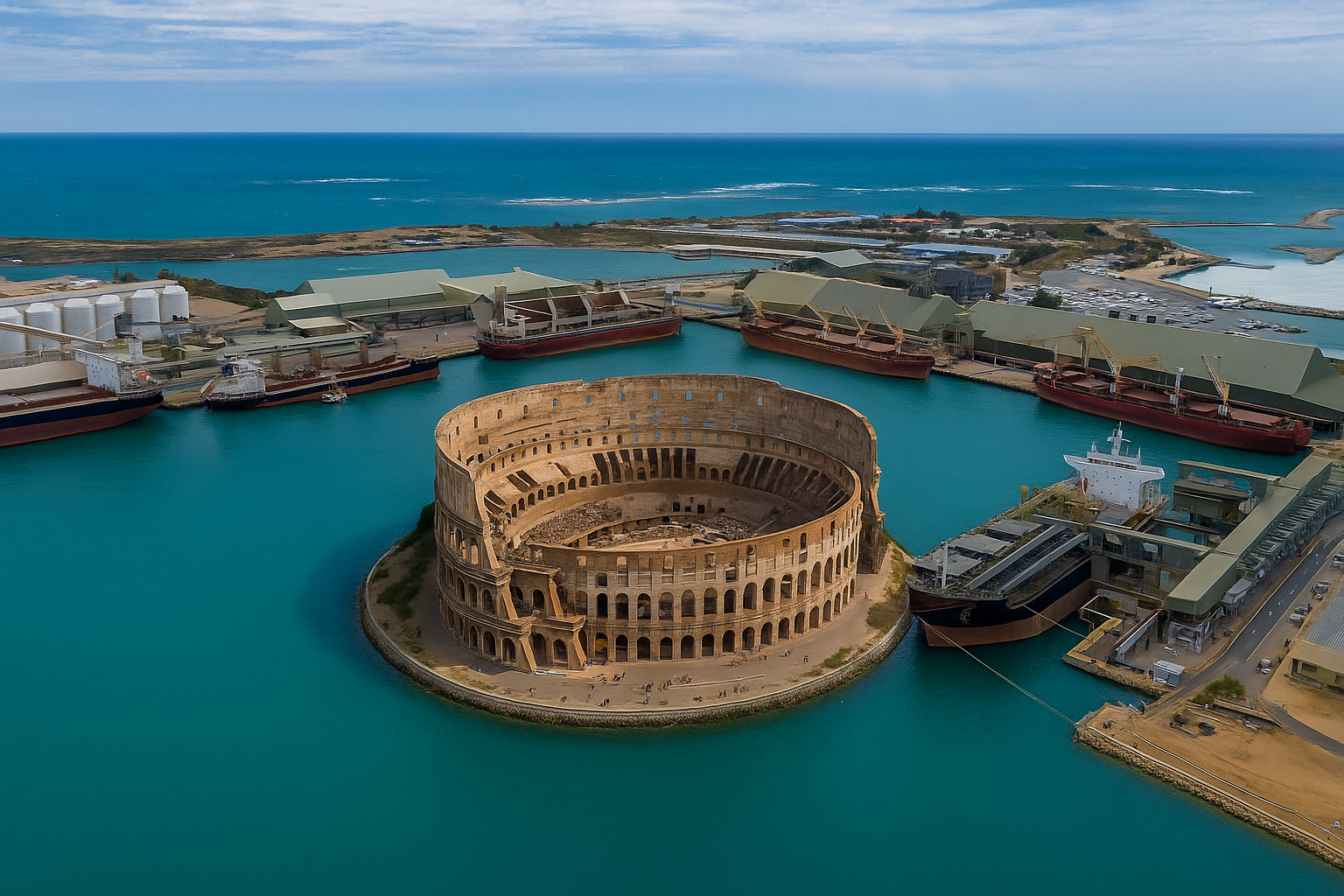
The ambitious build will include deeper berths, larger ship-turning areas, and improved loading infrastructure—but more importantly, will feature live gladiator combat, bulk commodities-themed theatre, and forklift chariot racing every second Saturday.
“This isn’t just infrastructure,” said one minister with a sword strapped to his hi-vis vest. “This is legacy.”
Despite early community concerns, the government remains confident in the project’s cultural and economic value. “We’ve taken strong advice from a bloke named Juvenal we met at the pub,” said the spokesperson. “He said if you give people bread and circuses, they won’t revolt. So that’s the plan. Bread. And lets face it when is the government not a circus.”
Dust, in fact, remains a sore point. Many local residents had hoped the $350 million would instead be directed at finally developing the long-mooted Oakajee Port, or at the very least addressing the toxic red cloud of iron ore dust that regularly coats the CBD, every boat in the marina, and the occasional seagull.
“Sure, the dust burns the eyes and strips paint off fibreglass,” said one Geraldton resident, “but have you seen the forklift chariots? They’re truly incredible.”
In a surprise appointment, construction will be supervised by none other than General Maximus Decimus Meridius, Commander of the Armies of the North..
Wearing a hard hat over his wolf-pelt shoulder wrap, Maximus was seen surveying the site while whispering, “What we do in life echoes in eternity” to no one in particular.
The entire project will be funded by a minor rates increase, described by council as “a gladiator tax” and estimated to cost local households a fortune.
Construction is expected to be complete by 2026, or when morale runs out—whichever comes first.

